
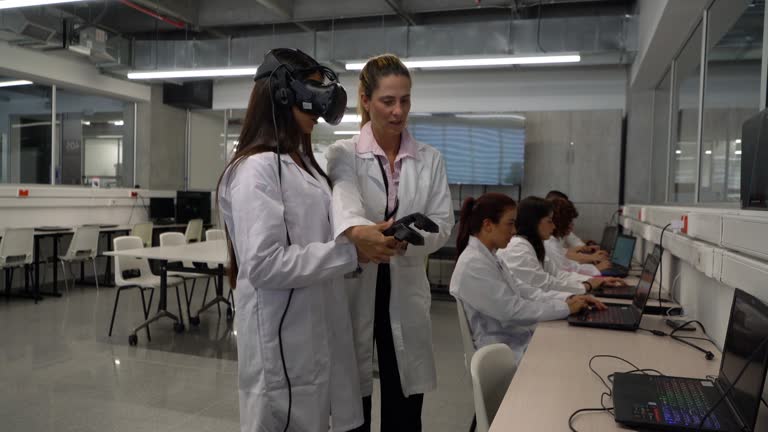
Virtual reality (VR) is changing the way students learn how to use a stethoscope. Instead of only practicing on real patients, you can now train in a virtual world. This makes learning faster, safer, and more fun. Let’s explore how Virtual Reality is enhancing stethoscope training and why it’s becoming so popular in medical education.
What Is Virtual Reality and How Does It Work in Medical Training?
Virtual reality uses special headsets to create a computer-generated 3D world. When you wear the headset, it feels like you’re inside a hospital or a clinic. In stethoscope training, VR helps you practice listening to body sounds, like heartbeats and breathing, in a lifelike environment.
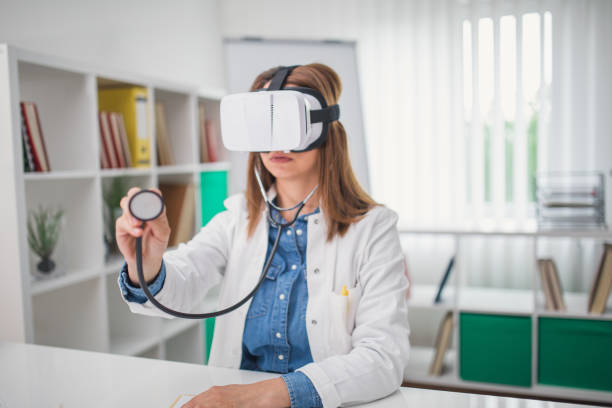
You can use VR to experience 360-degree videos, where you turn your head to see the entire space around you. You also get instant feedback, so if you make a mistake, the system shows you how to fix it. This helps you learn faster.
Why Is Virtual Reality Important for Stethoscope Training?
Learning how to use a stethoscope can be tricky. You need to know what normal and abnormal heart or lung sounds are. VR makes this easier by letting you practice as much as you want, without needing live patients.
Here’s how VR helps:
- Safe Practice: You don’t have to worry about harming real patients.
- Unlimited Access: You can listen to rare heart conditions that you might not hear in a regular clinic.
- Flexible Learning: You can train at home, in a classroom, or even while traveling.
How VR Makes Stethoscope Training Better Than Traditional Methods
Traditional training methods rely heavily on live patients and physical models. While these methods are valuable, they have limits. For example, patients with rare conditions might not always be available for practice. VR overcomes these challenges.
Comparison: Traditional vs. VR Training
| Feature | Traditional Training | VR Training |
| Patient Availability | Limited to who is present | Simulates various patients anytime |
| Types of Conditions Covered | Common cases only | Includes rare and complex conditions |
| Feedback | Delayed or instructor-based | Instant and detailed feedback |
| Risk Level | May involve risks to patients | Completely risk-free |
| Accessibility | Classroom or hospital-only | Anywhere with a VR headset |
How Does VR Enhance Learning for Steth Learners?
Virtual reality enhances learning by making it interactive. Instead of just reading about heart sounds, you listen to them in a virtual setting. This hands-on experience is great for building your confidence.
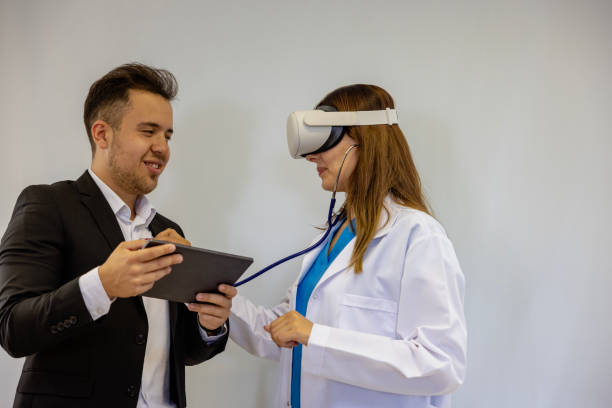
VR also works as an exercise for your brain. It engages your senses and helps you focus better. With different types of VR training, you can customize your learning to fit your needs. For example:
- Basic Training: Learn how to hold and use a stethoscope properly.
- Advanced Scenarios: Practice diagnosing complex conditions with virtual patients.
How Can Virtual Reality Be Used in Healthcare?
VR is not only useful for stethoscope training—it’s transforming healthcare. Doctors use VR to prepare for surgeries by practicing on virtual models. Therapists use it to help patients recover from injuries or manage stress. Here are a few examples:
- Rehabilitation: Patients use VR games to regain movement in their arms or legs.
- Mental Health: VR helps people overcome phobias by exposing them to their fears in a safe environment.
- Medical Education: Students use VR to practice procedures, like inserting IVs or diagnosing diseases.
Designing the Best Virtual Reality Simulations for Medical Learning
Creating realistic VR simulations is key to effective training. Developers use advanced tools like 360-degree videos to replicate real-life medical scenarios. These simulations include features like realistic sounds, such as a patient’s heartbeat or wheezing.
Adding quizzes and interactive tasks to VR sessions also helps you stay engaged. For example, you might get a pop-up question asking what condition you just heard. This approach ensures that VR training is both fun and educational.
What Are the Advantages and Disadvantages of VR in Stethoscope Training?
Advantages
- More Practice Opportunities: You can train as often as you need, even on rare cases.
- Cost-Effective in the Long Run: Once created, VR systems are cheaper than using live patients or hiring instructors.
- Interactive Learning: VR keeps you engaged with real-time feedback and lifelike scenarios.
Disadvantages
- High Initial Costs: Developing VR systems can be expensive.
- Technology Dependence: You need access to the right equipment and software.
- Learning Curve: Some students may take time to adjust to using VR tools.
What Does the Future Hold for Virtual Reality in Healthcare?
As VR technology improves, it will offer even better tools for stethoscope training. Future systems might combine VR with augmented reality (AR), where you see holographic patients while practicing in real-world settings.
Developers are also working on integrating artificial intelligence (AI) to give even smarter feedback. For example, AI could track your progress and suggest areas for improvement.
Conclusion
Virtual reality is reshaping stethoscope training by making it more interactive, accessible, and effective. With VR, you can practice with virtual patients, explore rare medical conditions, and get instant feedback—all without stepping into a hospital. As this technology continues to evolve, it will play an even bigger role in healthcare training.
So, whether you’re just starting with a stethoscope or refining your skills, VR offers endless possibilities for learning. Start exploring VR today, and take your medical training to the next level!
